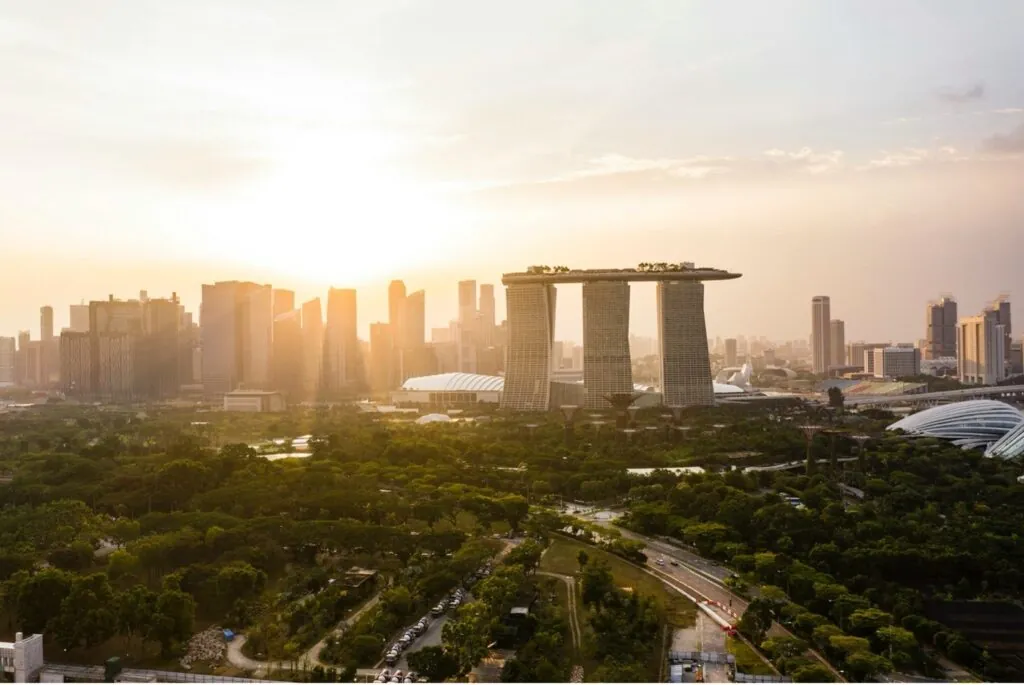

Singapore: The Ideal Location for Fusion Energy
September 28th, 2026
by Kieran Furlong
I’m in Singapore this week, talking about fusion energy for the third year running. Even before we started Realta Fusion, I had spoken to the Singaporean government about fusion, because I believe it is the most ideal place on the planet to build a fusion power plant! Singapore is an amazing place and a spectacular example of economic development lifting people out of poverty.
A critical aspect of that economic development is energy. Singapore’s energy consumption per capita is one of the highest in the world at 284 GJ per capita[1]- higher than the United States. In contrast to most of the other high energy use per capita countries (like Oman, Brunei, Canada, etc.) which are all big producers of energy, Singapore imports practically ALL of its energy – a necessity given the small size of this city-state which lacks domestic energy sources.
This hasn’t stopped Singapore from developing energy intensive sectors of their economy like petrochemical manufacturing or large data centers – a reminder that energy is an input to economic activity and thus economic growth.
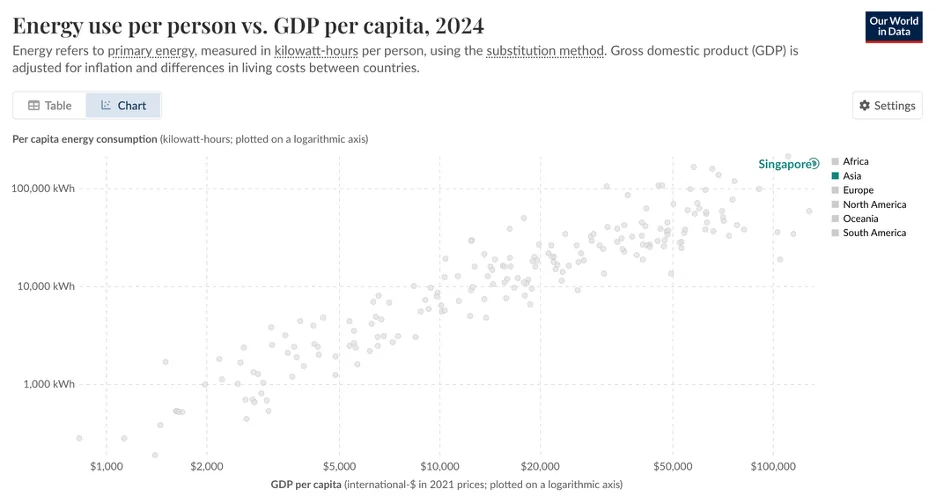
The linear relationship between energy use and GDP is clearly demonstrated here, with Singapore being high on both metrics. (Source: Our World in Data)
Singapore has the second highest proportion of its electricity generated going to data centers in the world. This was reported as 7% in 2021 and has likely grown since then. The rapid growth of energy consumption by data centers led the government to “tap the brakes” and impose a moratorium on new data center development while studies were conducted on how to handle the energy, water, and land needs for future development. The moratorium was relaxed in 2024, and just yesterday the Singapore Economic Development Board announced that 10% of the land on Jurong Island would be allocated for renewable energy facilities and a data center park.
Jurong Island is also the location of a massive ExxonMobil oil refinery which processes approximately 600,000 barrels of oil per day. The energy consumed by that refinery alone is probably around 35 PJ per year. Most of that, naturally, comes from the crude oil feedstock to the refinery. But what if the heat required to refine oil and process petrochemicals could instead come from a domestic energy source, allowing for more of the imported crude oil to be sold as value-added jet fuel or chemicals?
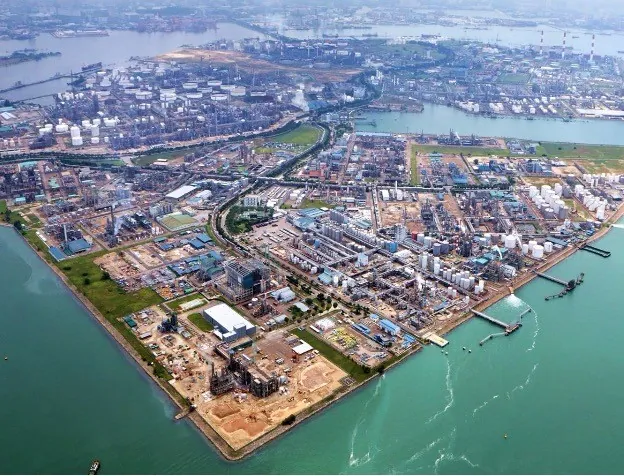
Jurong Island in Singapore. (Source: JTC)
Alongside its energy-intensive industries, Singapore faces an energy-intensive path to providing potable water to its citizens. Singapore is one of the most water-stressed countries in the world. As part of its “Four National Taps” strategy, Singapore plans to provide 30% of its water needs via desalination. Currently, this requires about 3.5 kWh per cubic meter of water produced.
So, will Singapore continue to rely on imported energy – subject to the volatility of international commodity markets and to shipping lanes and pipelines staying open? Or are there domestic energy generation options for the country? Climate change and rising sea levels also threaten Singapore, so there is additional pressure to decarbonize the country’s energy supply.
Land is obviously at a premium in this city-state. Singapore has one of the highest population densities in the world, with a population of 6.1M (or 8,600 people per square kilometer) squeezed onto a small island. So that greatly limits the potential for solar – even if its cloudy equatorial skies didn’t. Offshore wind isn’t possible in the world’s busiest shipping lanes, and the country lies firmly in the doldrums (yes, the actual “doldrums”!) in any case. Singapore’s best efforts to develop hydrogen as a fuel have come up against the realities of H2 being extremely difficult to transport and store. Importing it in the form of LNG or ammonia also doesn’t really address energy security or decarbonization.
So, what’s left? Geothermal has some potential as an energy source in Singapore, but will face similar land constraints. Importing electricity via subsea cables won’t solve the energy security issue, as has been clearly demonstrated in the Baltic Sea in recent times with the occasional combative trawler dragging an anchor. All of this points to forms of nuclear energy as the solution to Singapore’s energy needs.
Nuclear fission an imperfect option for Singapore. While it’s not limited by technical challenges, there are significant human challenges to solve. Social acceptance of nuclear in Singapore is still challenging in the aftermath of the 2011 Fukushima nuclear accident. The island’s size will be an obstacle. Exclusion zones (or Emergency Planning Zones, EPZ) around large nuclear fission plants are possible in countries with plenty of empty space. As you can see in the image below, the island is just not large enough for the typical exclusion zones used in the United States. So, that presents the government and regulators the challenge with explaining to its citizens why Singapore can use smaller exclusion zones than in other countries. Nuclear fission has proven to be a very safe and reliable way of generating electricity, but convincing people of that remains its biggest challenge.
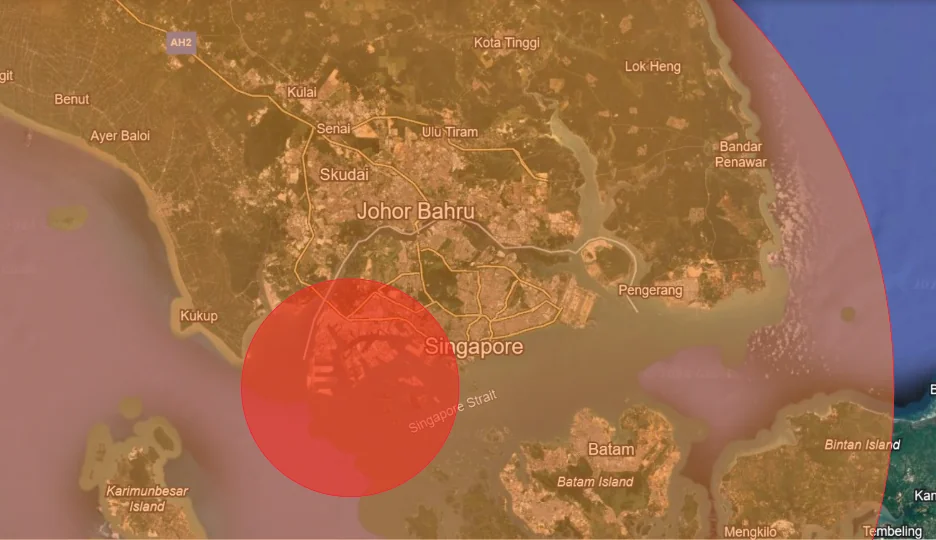
What conventional nuclear Emergency Planning Zones would look like around a fission plant on Jurong Island. Dark red is the Plume Exposure Pathway EPZ (10 miles / 16 km radius) and light red is the Ingestion Pathway EPZ (50 miles / 80 km radius).
Which brings us to fusion… At Realta we believe it is the ultimate source of energy for humanity, and I believe that Singapore is uniquely positioned to be an early and enthusiastic adopter of fusion energy. Fusion is fundamentally different from fission. Instead of splitting heavy atoms, we fuse light atoms – isotopes of hydrogen – together converting a tiny portion of mass into massive amount of energy. It’s a zero-carbon source of energy, that utilizes tiny quantities of widely abundant fuel and leaves behind no long-lived radioactive waste.
Singapore is an advanced industrialized economy that is energy hungry. But that hunger can be sated with domestic, zero-carbon fusion energy. We need to avoid the scarcity mindset and instead switch to an abundance mindset. Rather than seeing data centers as energy hogs taking from a limited supply, they can be one of the most productive income generating assets on a dollar per hectare basis – as long as you have the energy to feed them.
Given the constraints Singapore faces, I believe it is the IDEAL place to deploy fusion energy generation. Small footprint, zero-carbon, always on energy. The country doesn’t have a legacy nuclear fission industry or regulatory environment. It can craft a regulatory regime that is tailor-made for fusion, rather than trying to shoe-horn it into ill-fitting fission rules. Fusion offers an energy-abundant future for Singapore.
At the end of the 21st century when we look back on the energy industry, people will be bemused with the 20th century obsession with fuel. Who had the oil and the gas; who pulled it out of the ground; and how it was moved around the world by tanker and pipeline. Instead, they will be looking at a 21st century in which the energy industry is about the technology and the machines that “make” energy.
Singapore is well-placed to be a major player in this 21st century energy industry. I’ve outlined the reasons Singapore needs fusion and that’s why I believe it will be one of the first places to deploy commercial fusion energy. The demand is here. But the supply can also come from Singapore. The country has developed a deep expertise in materials science and the fabrication of components that withstand extreme conditions (like jet turbine blades). There are sophisticated companies which can commercialize such technologies, and Singapore can also attract overseas fusion companies to set up a presence here given the obvious need for fusion. This combination of necessity and invention offers a bright future for Singapore.